
Entry#1. The purpose of this blog post is to inform and to educate the reader on the organism I have chosen to write about. I am writing about the chimpanzee because this animal has always interested me. I don’t have any experiences with Chimpanzees I think they just interest me because of how intelligent and strong they are.
The common name of my organism is the Chimpanzee (you already know this I just wrote a whole paragraph on why I like them). Pan troglodytes is the scientific name for the Chimpanzee.
During today’s lesson we discussed a couple of different terms and learned about different biomes. I learned what parasitism, mutualism, commensalism, and symbiosis is. I thought today’s lesson was very interesting because it surprised me how much different organisms benefit each other in many different ways.
Chimpanzees are Heterotrophs. They are omnivores which means they eat plants and animals. They also ingest food to fight diseases. Chimpanzees are found in savanna woodlands, grassland-forest mosaics and tropical moist forests. Chimpanzees thrive in forest biomes. These areas usually have a tropical temperature/climate with regular precipitation as you would expect in a rainforest for example.
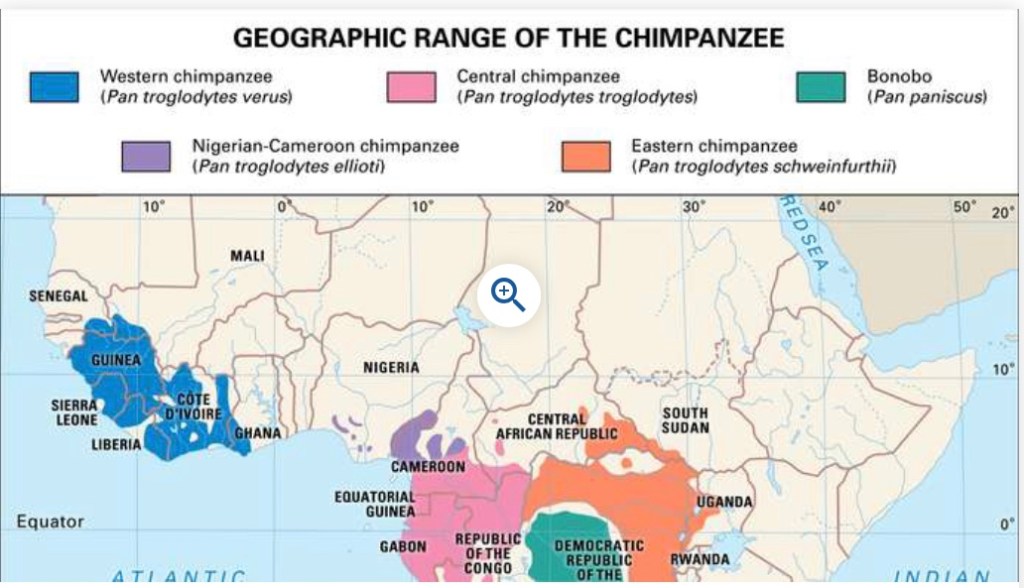
Chimpanzees are located in Africa in countries such as Uganda, Tanzania, and Rwanda.
Entry #2. Chimpanzees have a mutualistic relationship with the African Nutmeg plant. They are involved in commensalism when a chimp consumes an apple from a tree. It is commensalism because the chimpanzee benefits by having something to eat while the tree isn’t harmed. Chimps are commonly infected with nodular worms. The Chimpanzee is both a predator and prey. It hunts small monkeys, birds’ eggs, small antelope, wild hogs, and baboons, and insects. Being an omnivore, its main diet consists of fruits, nuts, stems, and leaves, but depending on location and availability of food, they also hunt other small mammals. Chimps have several types of predators such as leopards, jaguars, cougars, and some species of eagles and birds of prey.
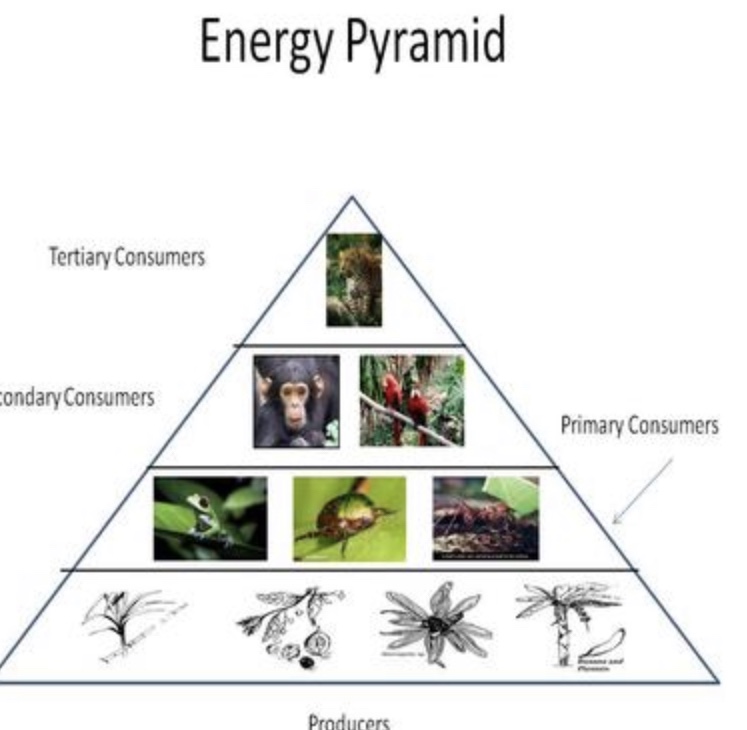
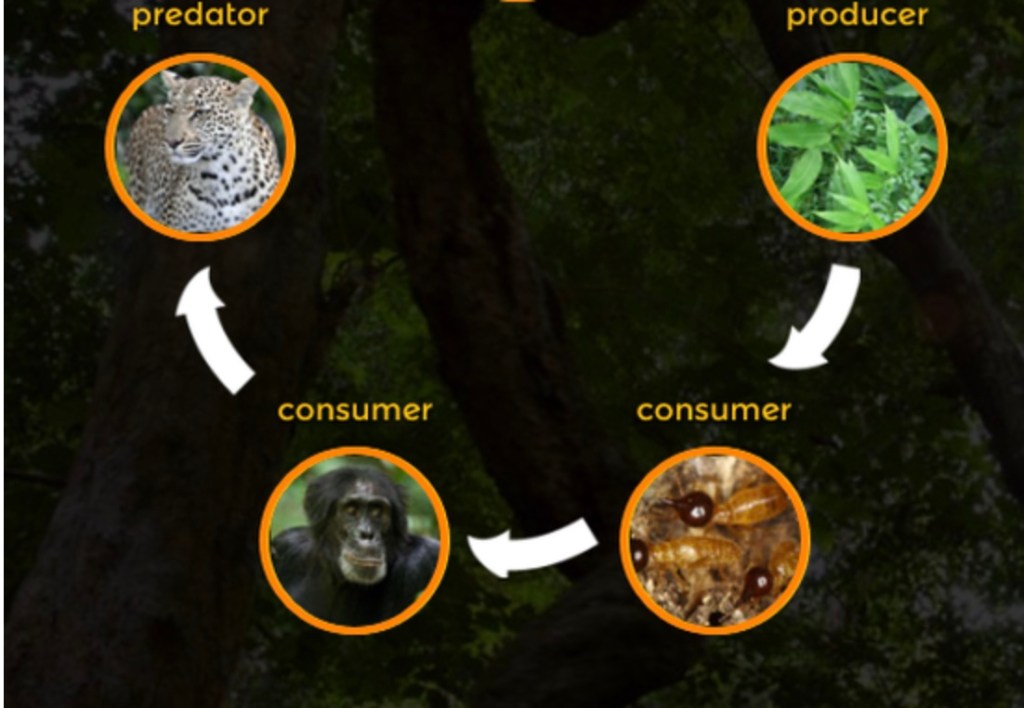
Since Chimps are omnivores, they eat insects,animals, and plants. If they were to go extinct it may cause an increase in some populations, but not a huge impact. We would also have no more chimp pelts or meat for African cultures.
Entry #3. The population density of chimpanzees is estimated to be around 0.32 individuals/km2. Chimpanzees’ dispersion type is clumped because of the 30-50 individuals that each group consists of.
The chimpanzee is listed on the IUCN Red List as an endangered species. Around 170,000 and 300,000 individuals are estimated across its range.
Chimpanzees are K strategists because of their long life span and number of offspring. Chimpanzees can live up to 40 years old. Chimpanzees usually only have 2 offspring in their lifetime.
Entry #4. The current known chimpanzee population is estimated to be around 150,000 to 200,000 individuals. The chimpanzee is classified as an endangered species. The main threats to chimpanzees are habitat loss, disease, and hunting, especially for bushmeat. enforcing stricter rules regarding tourists and park personnel’s contact with chimpanzees; and mobilizing the international conservation community. As God’s servants we are supposed to care and protect His creation.
 Luke Zayas